
EIB-LSHF
$0.95
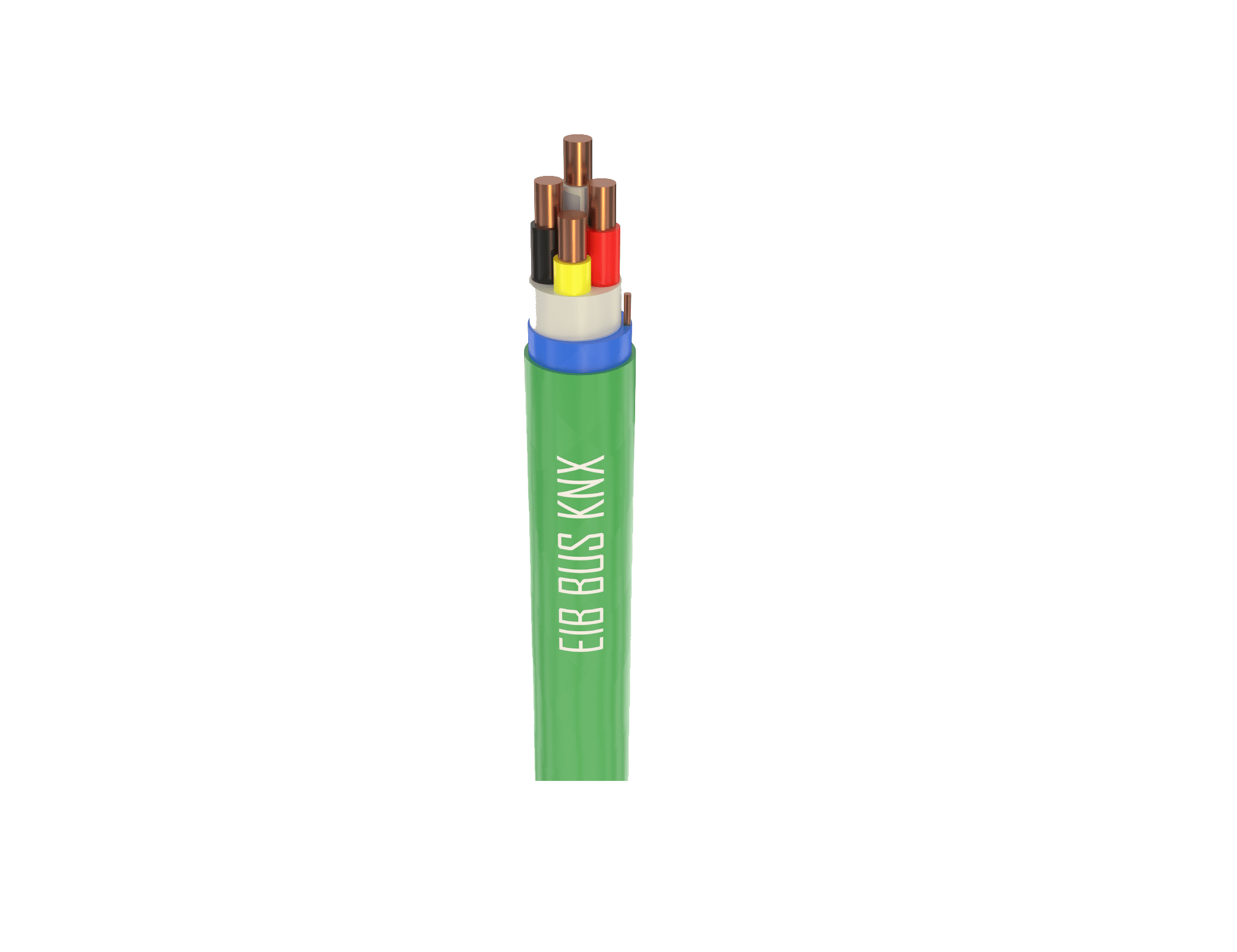
The EIB BUS cable is a specialized communication cable used for transmitting bus signals in building automation and control systems, making it ideal for smart building management and KNX installations. It can also be used as a measuring and control cable, transmitting measurement data in power equipment and process data in industrial systems. The EIB BUS cable’s durable design ensures reliable performance in various indoor and outdoor environments, while its flexibility enables easy installation in complex building automation infrastructure where precision and reliability are critical for system performance.
Feature :
Temperature Range
Flexing -5°C to +50°C
Fixed installation -30°C to +70°C
Electrical Properties
Conductor DC Resistance (Ω/km @ 20°C): 37.7 Ω/km
Insulation Resistance (M/km @ 20°C): 200 M/km
Core/Size : 2x2x0.8mm2
Complete Technical Specifications
Product Construction
| Component | Specification |
|---|---|
| Cable Type | EIB/KNX Bus Cable – Twisted quad (2×2) data transmission cable for building automation |
| Conductor Material | Bare copper, solid single wire, Class 1 (IEC 60228) |
| Conductor Size | 0.8 mm diameter (≈0.5 mm² cross-section) per conductor |
| Core Configuration | 4 cores (2 pairs) twisted in star quad formation for optimised EMC performance |
| Core Insulation | PVC (standard) or LSZH/LSHF (low-smoke, halogen-free for enhanced fire safety) |
| Core Identification | Red, Black, White, Yellow per EN 50090-2-2 / VDE 0815 |
| Screen Construction | Aluminium/Polyester (Al/PET) foil tape + tinned copper drain wire for 360° coverage |
| Screen Separator | Plastic film wrapping beneath screen foil |
| Outer Sheath | PVC (green, standard) or LSZH (green/white, fire-rated applications) |
| Sheath Colour | Green (standard, outdoor/general use); White (indoor/residential installations) |
| Overall Diameter | ≈6.1–6.5 mm (typical for 2×2×0.8 mm construction) |
| Flame Performance | Flame retardant per IEC/EN 60332-1-2 (single vertical wire test) |
Technical Characteristics & Performance
| Parameter | Specification |
|---|---|
| Nominal Voltage (U₀/U) | 300 V AC (250 V rated voltage per EN 50090) |
| Test Voltage | 4000 V AC (50 Hz, 1 minute, core-to-core and core-to-screen) |
| Conductor DC Resistance | ≤37.7 Ω/km at 20°C (0.8 mm solid copper conductor) |
| Insulation Resistance | ≥100 MΩ·km at 20°C (≥200 MΩ·km typical for LSZH variants) |
| Characteristic Impedance | 120 Ω ±10% (at 100 kHz, per KNX specification) |
| Capacitance (Core-to-Core) | ≤100 pF/m (typical 70–90 pF/m for quad construction) |
| Propagation Delay | ≤5 ns/m (critical for KNX timing compliance) |
| Temperature Range (Flexing) | -5°C to +50°C (dynamic installation, moderate movement) |
| Temperature Range (Fixed) | -30°C to +70°C (static installation, conduit/tray/trunking) |
| Installation Temperature | Minimum -5°C (avoid cable damage during cold-weather installation) |
| Bending Radius (Fixed) | 8 × outer diameter (≈50 mm for typical 6.3 mm cable) |
| Bending Radius (Flexing) | 15 × outer diameter (≈95 mm for dynamic applications) |
| Maximum Segment Length | 1000 m (single KNX line without repeater); 700 m recommended for reliable operation |
| Max Distance (Device-to-PSU) | 350 m horizontal cable run from power supply to furthest bus device |
| Max Devices per Line | 64 devices (without line coupler); 256 per area; 65,536 per system (with couplers) |
Compliance
| Standard / Directive | Compliance |
|---|---|
| EN 50090-2-2 | Home and Building Electronic Systems (HBES) – Part 2-2: System overview – General technical requirements (primary KNX cable standard) |
| EN 60669-2-1 | Switches for household and similar fixed electrical installations – Particular requirements for electronic switches (KNX devices) |
| ISO/IEC 14543-3 | Information technology – Home electronic system (HES) – Part 3: User process for KNX systems (international KNX standard) |
| VDE 0815 | German standard for KNX cable colour coding (Red, Black, White, Yellow) |
| IEC 60228 | Conductors of insulated cables (Class 1 solid conductor specification) |
| IEC/EN 60332-1-2 | Flame retardant performance – single vertical wire test |
| IEC 60754-1 | Halogen-free test (LSZH variants: <0.5% halogen acid gas emission during combustion) |
| IEC 61034-2 | Smoke density test (LSZH variants: light transmittance ≥60% during fire test) |
| RoHS Directive 2011/65/EU | Restriction of Hazardous Substances (lead-free, compliant materials) |
10000 in stock
Application Guidelines & Recommended Uses
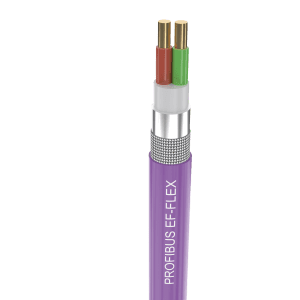
Screened flexible control cable engineered for crane festoon systems, floor conveyors, and automated shelf control — comprehensive application guidelines for Singapore industries
Recommended Applications
– Smart Lighting Control Systems:
Dimming actuators, switch sensors, presence detectors, light sensors, scene management (conference rooms, ballrooms), daylight harvesting, DALI gateway integration
– HVAC & Climate Control Systems:
Fan coil controllers, VAV damper actuators, temperature/CO₂/humidity sensors, hotel room automation, KNX-to-BACnet gateways, energy monitoring (kWh meters for BCA Green Mark reporting)
– Blinds, Shutters & Shading Control:
230 V AC blind actuators, facade automation, wind/rain sensors, scene integration (presentation mode, cinema mode, wake-up sequences)
– Access Control & Security Integration:
Electric locks via KNX relay actuators, intrusion detection (PIR sensors, door/window contacts), CCTV triggers, alarm interfacing (non-critical monitoring only)
Suitable Installation Environments
- Commercial Office Buildings (green PVC risers, white LSZH exposed ceilings)
- Hotels & Hospitality (guest room automation, LSZH mandatory for corridors/escape routes per SCDF)
- Residential Condominiums (luxury apartments, white LSZH aesthetic, free topology simplifies retrofit)
- Retail & Shopping Malls (track lighting control, LSZH for enclosed concourses, BCA Green Mark credits)
- Healthcare Facilities (hospitals, clinics, LSZH mandatory for wards/theatres, 200 mm separation from medical equipment EMI)
- Educational Institutions (classrooms, centralized lighting control, government projects require Green Mark Certified)
- Data Centres & Server Rooms (precision HVAC, environmental monitoring, LSZH for raised-floor plenum, screen grounded to earth grid <1 Ω)
Installation Restrictions
- Mains power distribution (>50 V AC) → Use NYM-J/NYY cables; SS 638:2018 requires ≥50 mm separation in shared trunking
- Fire alarm & life-safety circuits → SCDF-approved fire-rated cables (NHXH FE180, E90 per BS 8491)
- High-speed data networks (>100 kHz) → Cat6A S/FTP for BACnet/IP, Modbus TCP, Profinet, EtherCAT
- Outdoor direct UV exposure → UV-rated orange PVC conduit or armoured cable with PE sheath
- Direct burial without protection → Armoured KNX (SWA + PE) or buried orange conduit, depth ≥600 mm
- Corrosive/Hazardous environments → PUR or FEP-sheathed cables with IP68 glands
- High-temperature areas (>+70°C) → Route away from boiler rooms; use silicone cables (+180°C rated)
- Continuous flexing/Drag chain → Solid conductors fatigue; use Profibus/EtherCAT Class 5 stranded cables
- Explosive atmospheres (ATEX Zones) → IS-certified fieldbus cables (blue sheath) with galvanic isolators
- Medical imaging rooms (MRI, CT scan) → Fibre-optic KNX media coupler (TP-to-fibre converter)
FAQs
What are power cables?
Power cables are electrical cables designed to carry electrical energy from one point to another. They are used in various applications, including residential, commercial, and industrial settings. Understanding their specifications is crucial for safe and efficient usage.
How to choose cables?
When selecting power cables, consider factors such as voltage rating, current capacity, and environmental conditions. It’s essential to match the cable type to its intended application for optimal performance. Consult our technical datasheets for detailed specifications.
What is cable insulation?
Cable insulation is a protective layer that prevents electrical leakage and protects against environmental factors. It is crucial for ensuring safety and performance. Different materials are used for insulation, depending on the application requirements.
Can I customize orders?
Yes, we offer customizable solutions for power cables to meet your specific needs. You can request variations in length, gauge, and insulation types. Contact our sales team for more details on customization options.
What are standard lengths?
Standard lengths for power cables typically range from 1 meter to 100 meters. However, we can provide longer lengths upon request. Always check the product specifications for available options.