
How PVC Flat Cables Withstand Continuous Movement in Lift and Escalator Systems
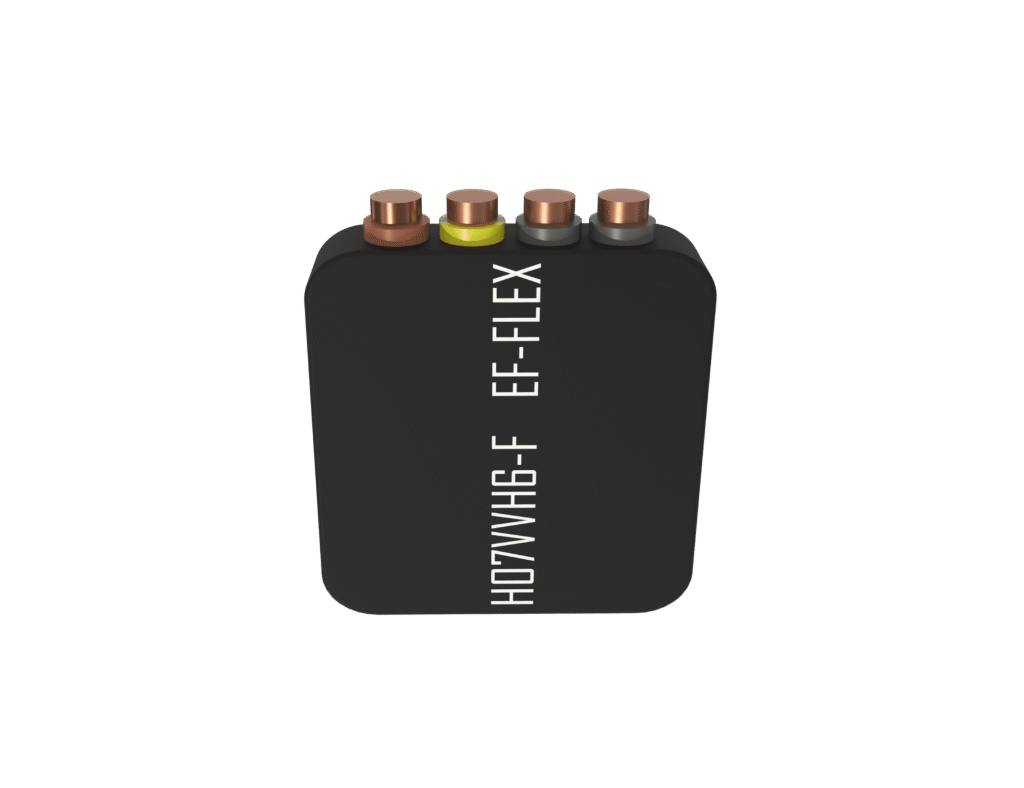
Published Date: August 19, 2026
AI Summary
PVC flat cables used in moving equipment are designed to cope with repeated bending, vibration, suspended weight and restricted installation space.
Their durability comes from the complete cable construction, including fine-stranded conductors, flexible insulation, a protective PVC sheath, flat geometry and, where required, supporting elements that reduce mechanical stress on the conductors.
Key Takeaways
- Continuous movement requires a purpose-designed cable. Ordinary fixed wiring may not tolerate the repeated bending, tension and vibration found in lift and moving-equipment applications.
- Flat geometry helps control cable movement. Arranging conductors side by side supports predictable bending and can make the cable easier to route in confined spaces.
- Fine-stranded conductors improve flexibility. Multiple small copper strands distribute bending stress more effectively than a more rigid conductor construction.
- PVC alone does not make a cable suitable for movement. The conductor, insulation, sheath, support system and complete mechanical design must all match the application.
- Correct installation is critical to service life. Excessive twisting, tight bending, poor suspension and abrasion can damage even a correctly specified moving cable.
Lift and escalator systems place very different demands on cables compared with ordinary fixed electrical installations.
A cable inside moving equipment may be required to bend repeatedly, support part of its own weight, withstand vibration and operate within a restricted space.
In lift systems, travelling cables must also move continuously with the lift car while maintaining reliable power, control or signal connections.
These conditions mean cable selection cannot be based on conductor size and voltage rating alone.
For PVC flat cable applications in industrial equipment, the mechanical construction of the cable is just as important as its electrical characteristics. Its ability to withstand movement depends on how the conductors, insulation, sheath and supporting elements work together.
Why Ordinary Cable Construction Is Not Enough for Continuous Movement
A cable used in a fixed installation may spend its entire service life with very little movement.
A cable in moving machinery faces repeated mechanical loading.
Depending on the equipment, this can include:
- Repeated bending
- Acceleration and deceleration
- Vibration
- Suspended cable weight
- Tensile loading
- Contact with nearby equipment
- Restricted bending space
Each movement places a small amount of stress on the cable.
If the conductor or insulation is not designed for this duty, repeated flexing can eventually lead to conductor fatigue, insulation damage or sheath cracking.
This is why an important distinction must be made:
Flexibility is a cable-design characteristic, not simply a material characteristic.
Using PVC does not automatically make a cable suitable for continuous movement. The complete construction must be designed for the intended mechanical duty.
1. Flat Construction Controls How the Cable Bends
The geometry of a flat cable is one of the main reasons it can be useful in moving systems.
In many round cables, conductors are arranged in layers or bundles around a central axis. A flat cable instead places its conductors alongside one another within a flattened profile.
This changes the way the cable behaves during movement.
A properly designed flat cable can provide:
- A defined bending direction
- More controlled movement of the conductors
- A low-profile installation
- Efficient use of vertical or horizontal space
- Predictable flexing when correctly installed
This is particularly useful in lift shafts, festoon arrangements and other applications where the movement path is controlled.
However, a flat cable should still be installed in its intended bending direction.
Trying to twist or flex it outside that plane can introduce mechanical stresses the cable was not designed to handle.
2. Fine-Stranded Conductors Help Resist Repeated Flexing
The conductors inside a moving cable also play a major role in its flexibility.
A relatively rigid conductor experiences concentrated stress when repeatedly bent. Flexible cable constructions generally use multiple fine copper strands instead.
This allows the movement to be distributed across many small strands.
The result can provide:
- Greater flexibility
- More even distribution of bending stress
- Better suitability for repeated movement
- Lower risk of premature fatigue when correctly specified
That does not mean every finely stranded conductor is suitable for continuous movement.
The strand construction still needs to match the required bending frequency, movement pattern and mechanical load.
A cable designed for occasional flexibility, for example, may not be suitable for an application that moves thousands of times during normal operation.
3. Flexible PVC Insulation Moves With the Conductors
The insulation surrounding each conductor must also tolerate repeated movement.
In a suitable flexible cable, the PVC compound needs to move with the conductor while continuing to provide reliable electrical insulation.
This requires the material to remain sufficiently flexible within its specified operating range.
Appropriately selected PVC insulation can help:
- Protect individual conductors
- Maintain electrical separation
- Accommodate repeated bending
- Resist ordinary installation wear
However, there are many different PVC formulations.
Not every PVC-insulated cable is suitable for moving machinery.
A general-purpose PVC cable intended for fixed installation should not be assumed to provide the same performance as a flat cable specifically designed for travelling, festoon or flexible applications.
The cable datasheet should always confirm the intended duty.
4. The Outer PVC Sheath Protects Against Mechanical Stress
The outer sheath forms the cable’s first line of protection against its surroundings.
During repeated movement, the sheath may be exposed to rubbing, vibration and contact with cable guides or surrounding machinery.
Depending on its specification, a PVC sheath can help protect the internal conductors against:
- Abrasion
- Moisture
- Dirt and contamination
- General mechanical wear
- Certain oils or chemicals
The exact resistance depends on the cable compound and product specification.
For this reason, a cable should not be selected simply because its outer sheath is labelled PVC.
A specialist would also check its temperature range, oil resistance, mechanical properties and intended movement duty before approving it for an industrial application.
5. Support Elements Help Manage Suspended Cable Weight
Lift travelling cables face a particularly demanding mechanical condition: they may need to support a substantial portion of their own weight.
Without appropriate mechanical support, this suspended load could place excessive tension on the electrical conductors.
Certain travelling cable constructions therefore incorporate dedicated support elements.
Depending on the cable design, these may include:
- Textile reinforcement
- Steel supporting elements
- Support strands
- Reinforcing components integrated into the cable
Their purpose is to carry part of the mechanical load so that the copper conductors are not being used as structural suspension members.
This becomes increasingly important as the unsupported cable length increases.
The permitted suspension length and tensile load should always be confirmed from the specific cable data rather than estimated from appearance or conductor size.
6. How Flat Geometry Helps in Confined Spaces
Space is another reason flat cables are commonly considered for moving machinery.
Lift shafts, machine frames and cable management systems may offer very little room for large loops of cable.
A flat construction can provide a relatively compact profile while still accommodating multiple conductors.
This can be useful around:
- Lift travelling systems
- Control connections
- Festoon systems
- Hoisting equipment
- Moving machinery
- Material handling systems
The controlled profile can also make it easier to organise multiple circuits in installations where space is limited.
However, compact construction does not remove the need to maintain the specified minimum bending radius.
Tighter is not necessarily better.
Repeated bending below the cable’s permitted radius can accelerate mechanical fatigue.
7. Why Installation Has a Major Effect on Cable Life
Cable service life depends heavily on how the cable is installed.
Even a cable specifically designed for repeated flexing can fail prematurely if its movement is uncontrolled.
Common installation problems include:
- Twisting the cable during installation
- Bending it below the minimum radius
- Incorrect suspension
- Poor strain relief
- Allowing the cable to rub against structures
- Clamping it too tightly
- Forcing movement outside the intended bending plane
A useful principle is:
Continuous-flex cable does not mean unrestricted-flex cable.
Moving cables are designed to perform within defined mechanical limits.
When those limits are respected, bending remains predictable and stress is distributed through the cable as intended.
When they are ignored, localised strain can develop in the conductors, insulation or sheath.
Where Are PVC Flat Cables Used in Industrial Equipment?
PVC flat cables can be suitable for several moving-equipment applications when their specification matches the duty.
| Application | Typical Mechanical Requirement |
| Lift travelling systems | Repeated vertical movement and suspended weight |
| Lift control connections | Flexible transmission of power, control and signals |
| Festoon systems | Repeated guided movement along a defined route |
| Overhead cranes | Movement with travelling machinery |
| Hoisting equipment | Repeated lifting and lowering cycles |
| Material handling systems | Flexible connections to moving components |
In lift systems, travelling cables are a particularly clear example because the cable follows the lift car through repeated vertical movement.
Escalator applications are more system-specific. Where flexible or movement-resistant cabling is required within escalator machinery, the cable should be selected according to the equipment manufacturer’s specification rather than assuming that a lift travelling cable is automatically suitable.
PVC Flat Cable Does Not Mean Every Flat Cable Is Interchangeable
Two flat cables may look very similar while being designed for completely different duties.
Before selecting one, check:
- Number of cores
- Conductor cross-sectional area
- Voltage rating
- Minimum bending radius
- Permitted movement type
- Suspension length
- Tensile load
- Temperature range
- Oil or chemical resistance
- Support elements
- Applicable standards
This is particularly important when replacing an existing cable.
Matching the dimensions is not enough. The new cable must match both the electrical and mechanical requirements of the equipment.
What Causes Moving Flat Cables to Fail Prematurely?
Premature failure is often caused by specification or installation problems rather than the cable material alone.
Common causes include:
- Using fixed-installation cable for moving duty
- Bending below the stated minimum radius
- Excessive tensile loading
- Incorrect suspension
- Twisting during installation
- Abrasion against equipment
- Poor strain relief
- Operating outside the specified temperature range
- Selecting the wrong conductor construction
- Using the cable for a movement pattern it was not designed to withstand
These issues underline why long service life depends on both the correct cable and correct installation.
PVC Flat Cable Selection Checklist
Before specifying a PVC flat cable for moving machinery, confirm the following:
| Check | What to Confirm |
| Movement | Fixed, flexible, festoon or travelling duty |
| Bending | Required minimum bending radius |
| Load | Cable weight, tensile force and suspension requirements |
| Conductors | Correct core count and cross-sectional area |
| Voltage | Suitable voltage rating |
| Temperature | Acceptable operating range |
| Environment | Exposure to moisture, oil, chemicals or abrasion |
| Support | Whether reinforcing elements are required |
| Installation | Correct routing, clamping and strain relief |
Choosing PVC Flat Cable for Continuously Moving Equipment
PVC flat cables can withstand demanding movement because their performance comes from the complete cable design, not from PVC alone.
A suitable construction combines:
Fine-stranded conductors + flexible insulation + protective sheath + controlled flat geometry + appropriate support + correct installation
For demanding PVC flat cable applications in industrial equipment, check the movement, bending radius, suspended load, environment and electrical requirements before choosing a cable.
Eco-Flex provides PVC flat cables and crane cable solutions for moving industrial equipment. For help selecting a cable suited to your application, contact Eco-Flex to discuss your operating and mechanical requirements.
Frequently Asked Questions
Why are flat cables used in lift systems?
Flat cables provide controlled bending and a compact profile, making them suitable for travelling applications where space is limited. Purpose-designed lift cables may also incorporate supporting elements to manage suspended cable weight.
Can ordinary PVC cable be used for continuous movement?
Not necessarily. PVC describes the insulation or sheath material, but continuous movement requires a cable specifically designed for repeated flexing, including suitable conductor construction and mechanical properties.
What makes a PVC flat cable flexible?
Flexibility comes from the complete construction, particularly fine-stranded conductors, flexible insulation and sheath materials, and a geometry designed to bend in a controlled direction.
What can shorten the service life of a moving flat cable?
Excessive bending, twisting, poor strain relief, incorrect suspension, abrasion and operating outside the specified temperature or load limits can all contribute to premature failure.
Are the same flat cables used in lifts and escalators?
Not automatically. Lift travelling cables are designed for repeated vertical movement, while escalator cable requirements depend on the specific equipment and location. The system manufacturer’s cable specification should always be followed.